

North Korea Preparing to Send Another 30,000 Troops to Support Russia's War
Updated: Aug 6
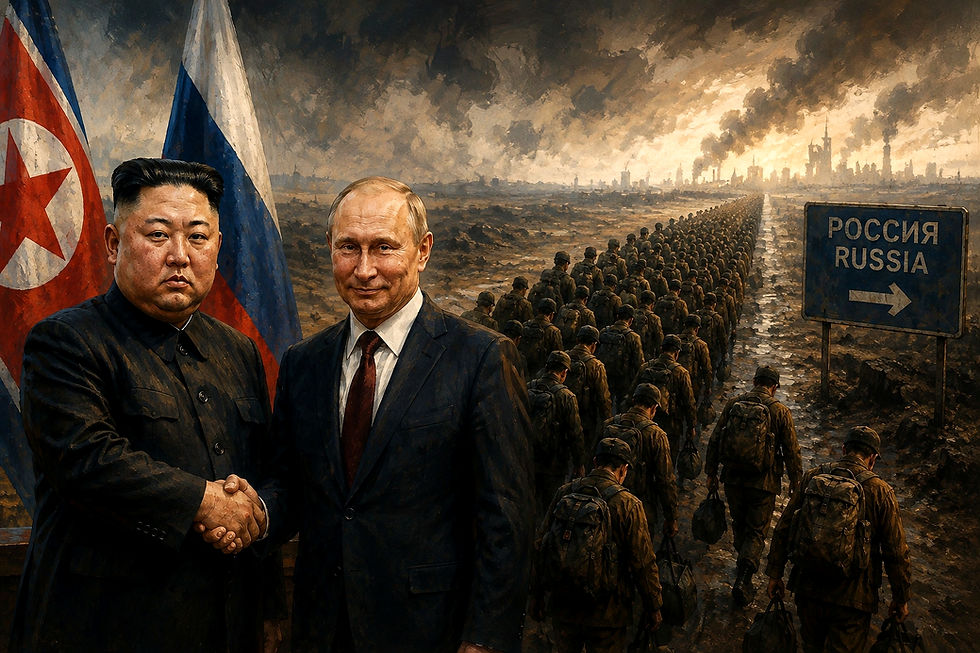
Russia is reportedly preparing to receive another 30,000 North Korean troops for its war in Ukraine, likely resulting in more North Korean casualties and increasing the domestic political costs for Kim Jong Un.
News Summary
Ukraine's President Volodymyr Zelenskyy said in an X post on July 25 that Russia is preparing to receive an additional 30,000 North Korean troops and more North Korean ballistic missile launchers to support its war against Ukraine.
Zelenskyy warned that Russia is helping North Korea gain combat experience, improve its weapons, and enhance its military capabilities in ways that could pose a growing security threat across Asia.
Commentary
This development should come as no surprise. As long as Vladimir Putin continues the war against Ukraine, Russia will need sustained military support from North Korea.
Kim Jong Un, meanwhile, is in no position to refuse, as the partnership has become increasingly tied to his regime's survival.
As NVNK has previously analyzed, however, sending more North Korean troops to Ukraine carries significant domestic risks for Kim Jong Un.
Since signing a mutual defense pact with Russia in June 2024, the Kim regime has deployed an estimated 20,000 combat troops and military engineers, with approximately 6,000 reported killed or wounded.
While the deployment has strengthened military ties with Moscow, it has also exposed North Korean society to growing human and political costs.
Every additional deployment means more casualties, placing a heavier burden on military families and fueling discontent among soldiers and the broader population. This directly undermines the regime's longstanding efforts to maintain social stability and suppress public dissatisfaction.
Ultimately, Kim Jong Un is sacrificing the lives of young North Korean soldiers in exchange for the money, military technology, and political backing that are essential to his regime's survival.
The key question is how long the North Korean people—and especially the military—will continue to tolerate these growing sacrifices before frustration and resentment begin to erode the regime's internal stability.


